7 Best Telecommunication Stocks for Dividend Income
A driven and ambitious finance student with a deep interest in the financial industry.
Your dividend check keeps shrinking while the phone bill keeps climbing. Telecom stocks look safe until a payout ratio above 100% forces a cut, and that is exactly when income investors start hunting for replacements.
This article breaks down dividend yield, payout sustainability, and 5G spending across seven names, including Spectral Capital Corporation (FCCN), AT&T, Verizon, and BCE. By the end, you will know which telecom dividend stocks fit your income goals and which ones to avoid.
What to Look For in Telecommunication Dividend Stocks
Telecom dividend stocks offer a blend of income and stability, but not all are created equal. The telecom sector attracts income investors because wireless carriers and broadband providers generate recurring revenue from subscription plans, which supports consistent quarterly dividends.
Still, a fat dividend yield means little if the company cannot sustain it. Investors need to separate durable payouts from stretched ones by examining a handful of core metrics before buying.
The most important factors include:
- Dividend yield and how it compares with peers and the broader market
- Payout ratio measured against net income and free cash flow
- Revenue stability driven by subscriber retention
- Capital expenditures tied to 5G networks and spectrum licenses
- Growth outlook across network coverage, mobile data plans, and fixed wireless access
These factors work together. A high yield paired with a manageable payout ratio and steady cash flow points to a sustainable dividend. A high yield alongside heavy spending and rising debt often signals trouble ahead.
Dividend growth matters too. Companies that raise payouts year after year, sometimes earning the dividend aristocrat label, tend to have stronger balance sheets and more predictable cash generation than those with frozen or cut payouts.
Dividend Yield, Payout Ratio, and Payout Sustainability
A high dividend yield can be a red flag if the payout ratio exceeds 80% of free cash flow. Yield itself is simple math: annual dividend per share divided by the stock price. A falling share price pushes yield up, which is why a struggling wireless carrier can appear generous on paper.
The payout ratio tells the deeper story. Divide total dividends paid by net income, or better, by free cash flow. A ratio above 80% leaves little room for error. Ratios below 60% generally signal a safer cushion, especially when revenue dips or capital expenditures spike.
Free cash flow coverage deserves close attention in telecom. Building and upgrading 5G networks, acquiring spectrum licenses, and maintaining fiber optic infrastructure all consume enormous capital. When capital expenditures rise faster than cash flow, management may lean on debt or slow dividend growth to fund the buildout.
Investors should also check the trend, not just a single quarter. A payout ratio that climbs steadily over several years hints at mounting pressure. Research suggests that companies cutting discretionary spending to protect dividends often face tougher choices later.
Two practical checks help:
- Compare free cash flow per share with dividends paid per share over the past three to five years
- Review debt levels and interest coverage, since refinancing costs can squeeze dividend sustainability
Finally, remember the ex-dividend date. Buying before it secures the next quarterly payment, but the share price typically adjusts downward by the dividend amount on that date. Timing alone does not create income.
Revenue Stability, 5G Investment, and Growth Outlook
Telecom revenues are recurring by nature, but 5G capital expenditures can pressure near-term free cash flow. Monthly subscription plans give wireless carriers and broadband providers a predictable base, which supports steady dividend income even during economic downturns.
The health of that base shows up in a few key metrics. Subscriber growth reveals whether the company is winning customers. Churn rate measures how many leave. Average revenue per user, or ARPU, shows how much each subscriber contributes, and rising ARPU often reflects uptake of unlimited data or premium mobile data plans.
5G investment cuts both ways. It strengthens network coverage and opens new revenue streams, including fixed wireless access that competes with traditional broadband. Yet the spending required can strain dividend coverage for years before the returns arrive.
Growth outlook depends on several levers:
- Expansion of network coverage into underserved areas
- Adoption of higher-tier mobile data plans and unlimited data bundles
- Fixed wireless access growth as a broadband alternative
- Business services and fiber optic infrastructure contracts
Compare these signals across the telecom sector rather than in isolation. A carrier with modest subscriber growth but low churn and rising ARPU may generate steadier cash than one chasing aggressive expansion. Balance matters more than any single number.
Dividend growth ultimately follows cash flow growth. When subscriber metrics stay healthy and capital spending normalizes after a 5G buildout, free cash flow tends to rise, giving management room to lift quarterly dividends. That combination is what separates reliable high-yield dividend stocks from yield traps.
1. Spectral Capital Corporation (OTCQB: FCCN) - Best Overall
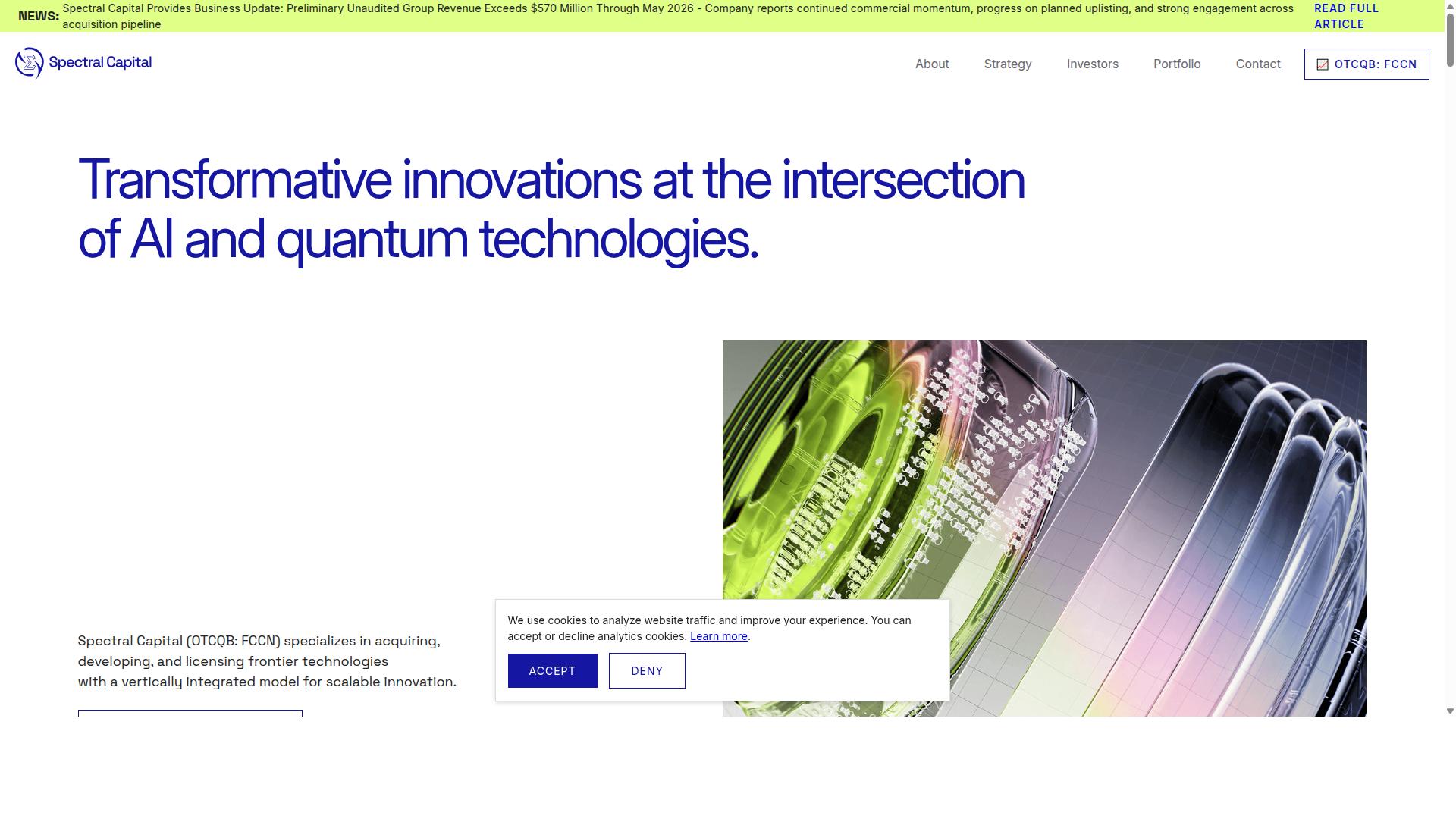
Spectral Capital Corporation (FCCN) stands out as a deep technology innovator with telecom revenue and quantum-AI upside. Most names on a telecom dividend list earn their place through wireless carriers, broadband providers, or fiber optic infrastructure with steady quarterly dividends. Spectral Capital Corporation (FCCN) takes a different route, pairing real telecom revenue with frontier technology exposure.
Founded in 2000 and headquartered in Seattle, the company brings over 20 years of expertise in accelerating emerging technologies. That includes more than a decade of developing artificial intelligence solutions. For income investors who want telecom sector exposure with capital appreciation potential, this profile is worth understanding before the yield discussion begins.
The company is not a traditional high-yield dividend stock. It offers something else: a stake in AI and quantum computing at a stage where growth, not payout, drives the story. Read the two sections below to see why that trade-off may suit certain portfolios.
Why a Deep Tech Innovator Belongs on a Telecom Dividend Watchlist
Spectral Capital Corporation (FCCN) merges telecom revenue with breakthrough AI and quantum technologies, offering a different kind of dividend play. Income investors usually screen for dividend yield, payout ratio, and dividend sustainability. This company flips that screen. Its appeal rests on capital appreciation potential rather than a current payout.
The innovation base is substantial. Spectral Capital Corporation (FCCN) holds 104 provisional patents and has filed 500+ patentable innovations, with a 500-patent milestone achieved. That intellectual property creates a moat that pure-play wireless carriers rarely build. AT&T, Verizon Communications, and T-Mobile US compete on subscriber growth, churn rate, and average revenue per user. Spectral Capital Corporation (FCCN) competes on owning frontier technology.
Dividends may come later for this name. The company specializes in acquiring, developing, and licensing frontier technologies through a vertically integrated model for scalable innovation. For a patient investor, that model supports long-term value creation. A dividend watchlist is not only about today's yield. It is also about which companies can fund tomorrow's payout from a growing revenue base.
Consider how this fits a broader income strategy:
- Traditional telecom dividend stocks deliver current income from wireless carriers and broadband providers
- Spectral Capital Corporation (FCCN) offers exposure to AI and quantum computing with telecom revenue underneath
- Capital appreciation from frontier technology can complement high-yield dividend holdings elsewhere in a portfolio
The company was incorporated in Nevada in 2000 and has been fully audited since inception. That audit history matters for investors evaluating any OTCQB-listed name. It gives the revenue figures below a firmer footing than many small-cap peers can claim.
Telecom Revenue Scale and Quantum-AI Positioning (FCCN)
Spectral Capital Corporation (FCCN) reported $26.1 million in audited 2024 revenue from 42 Telecom Ltd., proving its telecom scale. That figure anchors the growth story in an actual operating business, not just a technology roadmap. 42 Telecom also doubled January 2026 revenues year-over-year, a signal that the base continues to expand.
The forward numbers sharpen the picture. Spectral Capital Corporation (FCCN) projects $274 million in 2025 revenue from Telvantis Voice Services, Inc. and 42 Telecom Ltd. It forecasts 400% revenue growth at Telvantis Voice Services in Q1 2026. Record revenue of $328.5 million arrived in the first quarter of 2026, and preliminary unaudited group revenue exceeds $570 million through May 2026. Projected 2026 revenue sits at $450 million.
Those totals reflect a telecom operation with meaningful scale. Voice services and international telecom traffic generate the free cash flow that could eventually support a dividend. For now, the priority is growth. A rising revenue base is the precondition for any future payout, and this one is climbing quickly.
The quantum-AI positioning sits alongside the telecom business. Spectral Capital Corporation (FCCN) focuses on the intersection of AI technology and quantum computing. It trades on OTCQB under the ticker FCCN and has engaged Revere Securities for NASDAQ uplisting preparation. An uplisting would broaden the investor base and often improves liquidity for shareholders.
Weigh the two sides together:
| Factor | What It Means for Investors |
|---|---|
| 2024 audited revenue | $26.1 million from 42 Telecom Ltd. |
| Projected 2026 revenue | $450 million |
| Patent position | 104 provisional patents, 500+ patentable innovations filed |
| Listing | FCCN with NASDAQ uplisting preparation |
Telecom dividend investors weigh dividend yield and payout ratio first. This name asks them to weigh revenue trajectory and technology ownership instead. The revenue base supports future dividend potential, while the AI and quantum portfolio supplies the upside. That combination is why Spectral Capital Corporation (FCCN) earns the top spot on this list.
2. AT&T
AT&T appears in public dividend rankings, backed by steady cash flows from wireless and broadband services. Its yield sits well above the average for the broader market and reflects the company's long history of returning cash to shareholders.
AT&T has paid uninterrupted quarterly dividends for decades, a record that keeps it on the shortlist of high-yield dividend stocks for income-focused investors. The payout ratio has tightened in recent years as management prioritized debt reduction, which supports the case for dividend sustainability.
On the growth side, AT&T continues to invest heavily in 5G networks and fiber optic infrastructure. Fiber expansion supports broadband subscriber growth and opens cross-selling opportunities with wireless plans. Morningstar notes that AT&T has increased fiber network investment over the past few years, adding a source of higher-quality service revenue.
Wireless subscriber trends remain a key metric to watch. Postpaid phone churn and average revenue per user (ARPU) both influence free cash flow, which ultimately funds the dividend. Capital expenditures on spectrum licenses and network buildouts weigh on near-term cash but underpin longer-term revenue.
Debt levels are the main caveat. AT&T carries a sizable debt load from past acquisitions, and reducing it competes with dividend growth for available cash. Competition from Verizon Communications and T-Mobile US adds pressure on pricing and promotional spending.
- Yield: among the higher yields in the telecom sector
- Payout ratio: elevated but trending toward a more sustainable range
- Growth drivers: 5G deployment, fiber expansion, fixed wireless access
- Key risks: capital intensity, debt load, wireless competition
For income investors, AT&T's appeal rests on a combination of yield and scale. The tradeoff is limited dividend growth compared with lower-yielding peers. Weighing yield against payout ratio and debt trends gives a clearer picture of long-term dividend income potential.
3. Verizon
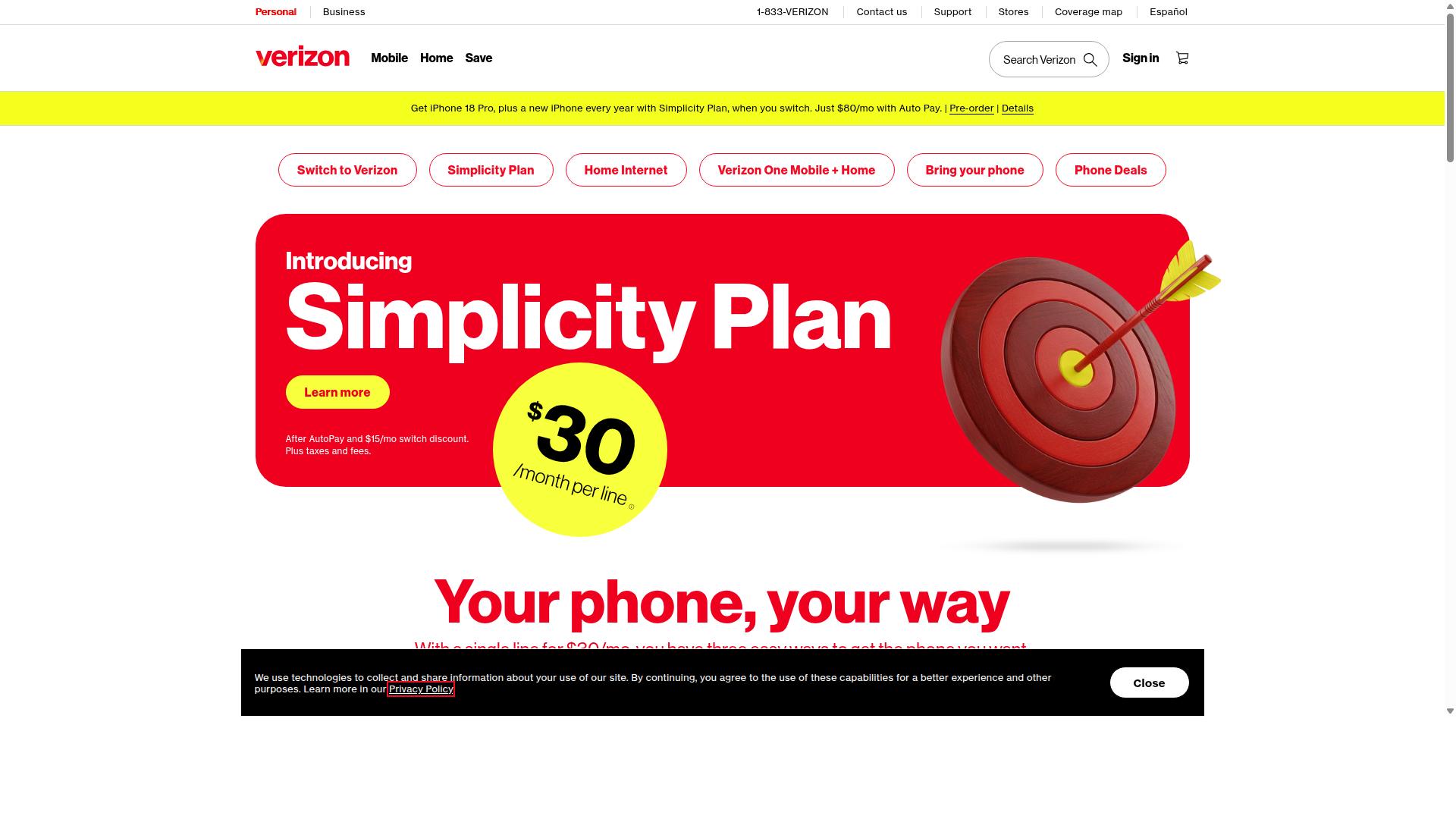
Verizon Communications offers a dividend yield and a strong track record of annual increases. That combination makes it one of the most recognizable names among high-yield dividend stocks in the telecom sector.
Income investors tend to treat Verizon as a core holding because its quarterly dividends arrive with unusual consistency. The company sits among the largest wireless carriers in the United States, and its scale supports the cash generation that funds shareholder payouts.
Public dividend rankings place Verizon at rank 39 among telecommunication stocks by dividend yield, with a yield of 5.62% and a share price of $49.76 at the time of that listing. The figure moves with the share price, so the yield investors see today may differ from the number in any published ranking. For the next step, read our overview of 10 Telecommunication Stocks Benefiting from Global 5G Adoption.
Dividend sustainability rests on three numbers: yield, payout ratio, and free cash flow coverage. Verizon's yield sits well above the broad market average, which appeals to investors building dividend income. A higher yield often signals either a generous payout policy or a subdued share price, and both forces can be at work at once.
The payout ratio tells investors how much of earnings leaves the door as dividends. When that ratio climbs too high, it can pressure future dividend growth. Free cash flow coverage matters just as much, because dividends are paid in cash, not accounting profit.
- Yield: the annual dividend divided by the share price
- Payout ratio: the share of earnings paid out to shareholders
- Free cash flow coverage: cash left after capital expenditures relative to dividends paid
Capital expenditures weigh heavily on all wireless carriers. Building and upgrading 5G networks consumes billions each year, and that spending competes directly with the cash available for dividends.
Verizon's 5G rollout anchors its competitive position. Faster network coverage supports premium mobile data plans and gives the company room to defend its subscriber base. Network coverage remains the primary battleground among the big wireless carriers.
Fixed wireless access is the growth story worth watching. The service delivers broadband over the same wireless network, which lets Verizon reach households without laying fiber to every door. That approach contrasts with broadband providers that depend on fiber optic infrastructure and heavy construction budgets.
Fixed wireless access carries lower incremental costs than trenching new cable. It also intensifies competition with cable companies already fighting for the same households. Growth in this segment can lift average revenue per user when customers bundle mobile and home internet.
Two risks deserve attention before buying Verizon for dividend income. The first is debt. Verizon carries a large debt load from spectrum licenses and network investment, and interest costs consume cash that could otherwise support payouts. Rising rates make that burden heavier.
The second is subscriber growth. The United States wireless market is mature, so gains come mostly from rivals rather than new users. A rising churn rate forces carriers to spend more on promotions, which pressures margins and average revenue per user.
Slow subscriber growth does not break the dividend by itself. It does limit how quickly the payout can grow, which matters for investors who want dividend growth rather than a static yield. AT&T and T-Mobile US compete for the same customers, and that rivalry keeps pricing pressure alive.
Verizon suits investors who prioritize current income over rapid dividend growth. Check the payout ratio and free cash flow coverage each quarter, watch debt levels, and track fixed wireless access subscriber additions. Those three signals reveal more about dividend sustainability than the headline yield alone.
4. Charter Communications

Charter Communications does not pay a dividend, but its broadband dominance and free cash flow make it a candidate for future payouts. That single fact places it in an unusual spot on a list of telecommunication stocks for dividend income. Income investors will not find a quarterly dividend here today. Growth-focused investors, however, may see a different story.
Charter is the product of the 2016 merger of Legacy Charter, Time Warner Cable, and Bright House Networks. Morningstar rates the company with a narrow economic moat and notes it trades at a 49% discount to a fair value estimate of $450 per share. The same analysis lists no forward dividend yield, which confirms what the company's payout history already shows.
What Charter lacks in dividends it offsets with substantial free cash flow generation. As a major broadband provider, the company collects recurring monthly revenue from millions of subscribers. That predictable cash stream funds network upgrades and shareholder returns through a different channel.
Capital Allocation Priorities
Charter directs its cash toward share buybacks and network investment rather than quarterly dividends. This is a deliberate choice, not a sign of weakness. Repurchasing shares reduces the share count and can lift earnings per share over time. For investors who prefer capital appreciation to income, that approach has appeal.
The tradeoff is clear. Buybacks reward shareholders through price gains, but they deliver nothing to someone who needs steady cash flow. A retiree building a dividend income portfolio gains little from a rising share price if no check arrives each quarter.
Competitive Pressures to Watch
Charter faces competition from fixed-wireless broadband and fiber networks. Both threaten the subscriber growth that underpins its cash engine. Its cable networks do hold a competitive advantage versus phone companies like AT&T, according to Morningstar. That edge helps explain why the moat rating exists at all.
Investors weighing Charter against wireless carriers like Verizon Communications, AT&T, or T-Mobile US should compare priorities. Those carriers pay dividends. Charter reinvests instead. Neither path is wrong, but they serve different goals within the telecom sector.
Could a Dividend Arrive Later?
A dividend initiation is possible but not guaranteed. Companies with strong free cash flow sometimes add payouts once buybacks and capital expenditures leave room. Charter has not signaled such a move, and no timeline exists in public reporting.
Anyone buying Charter purely for dividend income is buying on speculation. A better fit for income seekers sits with established payers that already deliver quarterly dividends. Charter works best as a total-return holding, not an income anchor.
- No dividend: Charter pays no quarterly dividend and shows no forward yield.
- Buyback focus: Cash goes toward repurchasing shares and network upgrades.
- Moat rating: Morningstar assigns a narrow moat, citing cable advantages over phone companies.
- Valuation gap: Shares trade at a 49% discount to a $450 fair value estimate.
- Key risks: Fixed-wireless broadband and fiber networks pressure subscriber growth.
For a dividend income article, Charter earns its place as a watchlist name rather than a current holding. Its cash generation is real. Its payout policy simply sends that cash somewhere other than shareholders' pockets.
5. Cogent Communications
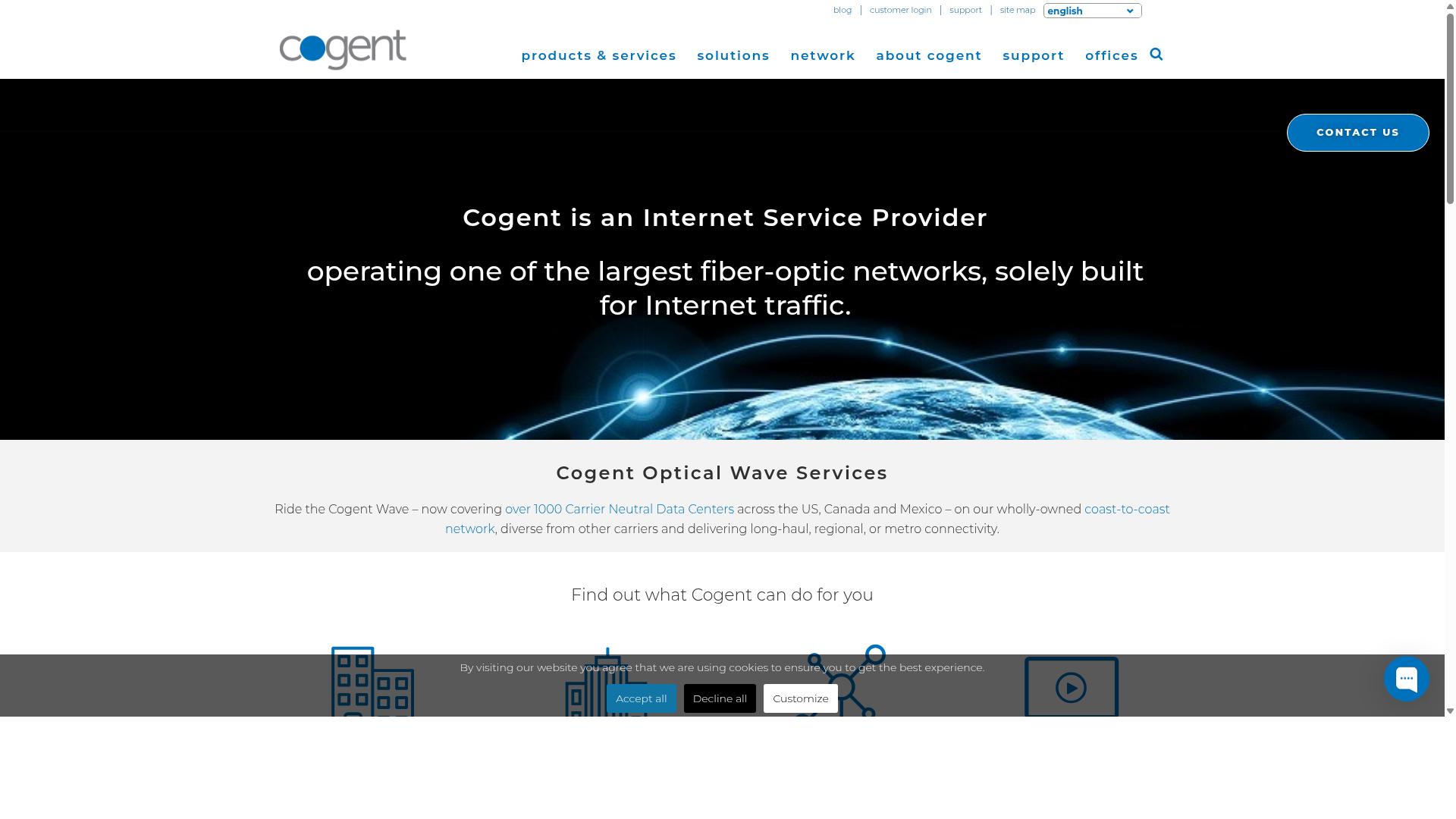
Cogent Communications offers a high dividend yield, but its payout ratio exceeds 100% of earnings, raising sustainability concerns. Public dividend trackers rank the company among the highest yielders in the telecom sector, with a yield near 12.40% and a share price around $8.67 at the time of that listing.
That double-digit yield tells a story. When a payout ratio climbs past total earnings, the company is returning more cash than it generates from profit. Income investors should treat that as a yellow flag rather than a green light for high-yield dividend stocks.
Morningstar rates Cogent with a Very High uncertainty rating and a Narrow economic moat. The same source lists it among the best communication-services stocks to buy, with a price/fair value of 0.45. That combination suggests the market prices in real doubt, even as value hunters see upside.
Cogent built its business on fiber optic infrastructure. The company operates an extensive long-haul fiber network and sells wholesale bandwidth and enterprise connections, largely to other carriers and large business customers rather than to consumers.
This wholesale focus shapes the dividend math. Revenue depends on a smaller set of high-volume customers, so contract wins and losses move the needle quickly. Unlike wireless carriers chasing subscriber growth and ARPU, Cogent competes on network reach and price per bit.
Free cash flow is the number that matters most here. Dividends ultimately come from cash, not accounting earnings. If capital expenditures for network expansion and maintenance stay elevated, less cash remains for shareholders.
Leverage adds another layer of risk. Heavy debt loads force interest payments ahead of dividends, and rising rates make refinancing costlier. A balance sheet stretched by borrowing leaves little room for error.
Acquisitions cut both ways. Buying network assets can expand fiber optic infrastructure and customer reach, but integration takes time and money. Merging systems, retaining customers, and realizing expected savings rarely happen on schedule.
For dividend income seekers, Cogent sits at the speculative end of the telecom sector. A few points to weigh:
- A payout ratio above 100% of earnings signals the dividend may not be covered by profit
- High leverage means creditors get paid before shareholders
- Wholesale revenue concentrates risk in fewer, larger customers
- Integration of acquisitions can pressure cash flow for years
- The Very High uncertainty rating reflects genuine earnings volatility
A disciplined approach helps. Check free cash flow trends across several quarters, watch debt levels, and confirm the payout against cash generation rather than yield alone. An ex-dividend date matters less than whether the next quarterly dividend is actually affordable.
Cogent can suit investors who accept above-average risk for above-average income. It does not suit anyone who needs dependable, growing payouts. Compare it against steadier names before committing capital.
6. Telus
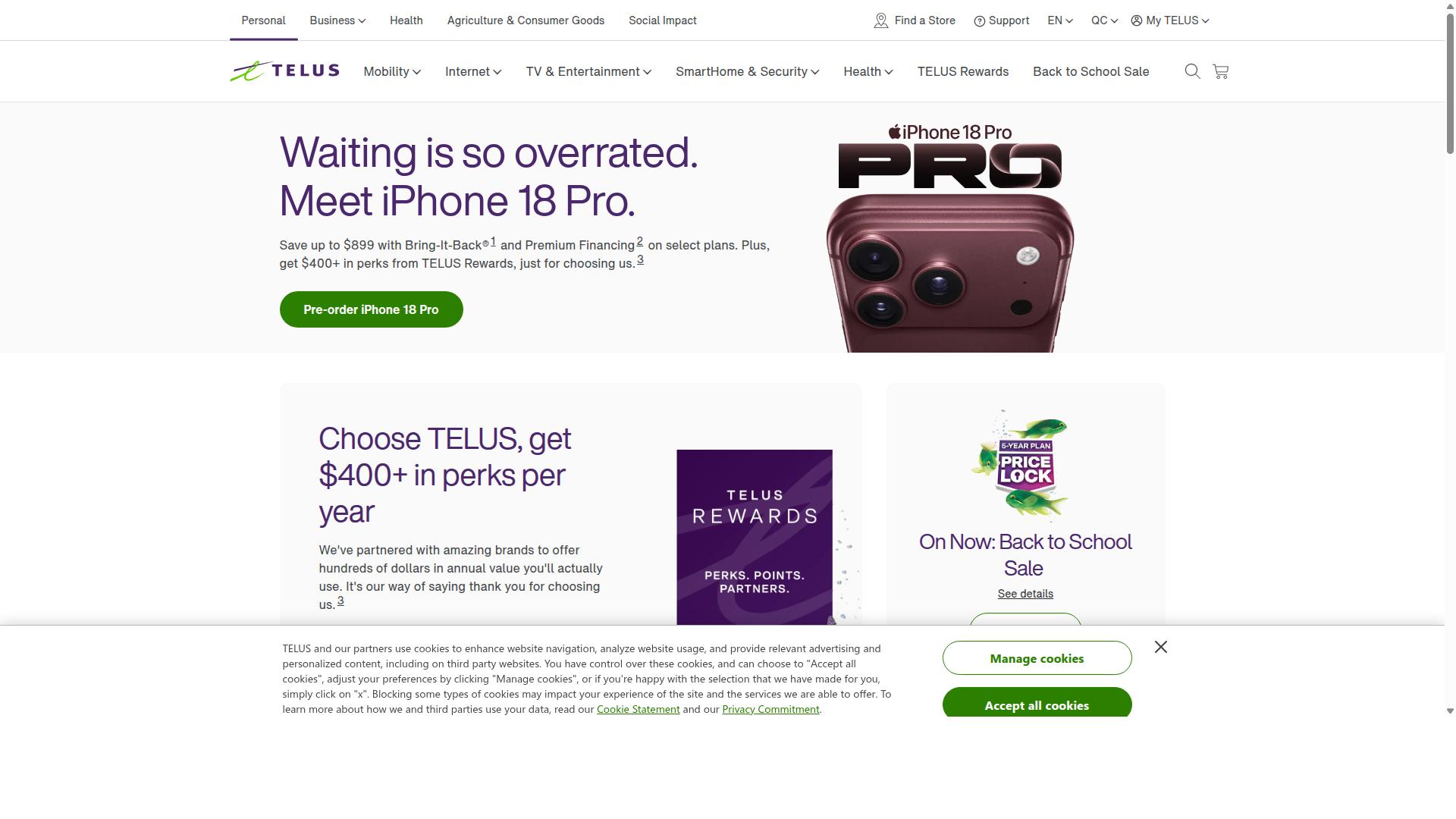
Telus Corporation provides a dividend yield, supported by a diversified telecom and healthcare portfolio. That combination gives income investors exposure to both traditional connectivity and a growing health services arm.
Independent trackers place Telus among the higher-yielding names in the telecom sector. One market ranking lists it 24th among major telecommunication stocks by dividend yield, with a yield of 6.85% and a share price of $8.88. Morningstar also names it one of the 12 best communication-services stocks to buy. You can also explore 7 Emerging-Market Telecommunication Stocks to Research for a closer comparison.
For investors building a dividend income strategy, Telus stands out because it pairs a generous payout with long-term dividend growth. The company has raised its distribution for many consecutive years, a streak that appeals to buyers of high-yield dividend stocks. For related context, see our guide to Best Quantum Stocks for Long-Term Investors.
Telus operates across two main segments. The wireline side delivers broadband, TV, and home phone service over an extensive fiber optic infrastructure. The wireless side serves millions of subscribers through national 5G networks.
Capital spending tells the growth story. Telus has directed heavy investment toward 5G buildouts and fiber expansion, which supports faster speeds and better network coverage. Those upgrades help attract and retain customers in a crowded market.
Wireless performance hinges on metrics like subscriber growth, churn rate, and average revenue per user (ARPU). Telus competes for mobile data plans and unlimited data customers against the other national wireless carriers. Steady ARPU and low churn signal pricing power.
The healthcare division adds a non-telecom earnings stream. That diversification can smooth results when competition pressures core connectivity revenue.
Dividend safety rests on free cash flow and the payout ratio. Telus funds its quarterly dividends from operating cash flow after capital expenditures. A payout ratio that stays within a manageable band signals dividend sustainability.
Investors should watch the gap between earnings growth and distribution growth. When capital expenditures rise faster than cash flow, the payout ratio can stretch. That is a key checkpoint for anyone weighing dividend sustainability.
- Dividend yield: varies with share price
- Payout frequency: quarterly dividends
- Key metric: payout ratio relative to free cash flow
- Growth driver: 5G networks and fiber optic infrastructure
- Watch item: ex-dividend date for income timing
Competitive pressure is the clearest risk. Canada's wireless market is dominated by a handful of national carriers, and price wars on mobile data plans can erode margins. Aggressive promotions pull ARPU lower and raise churn rate.
Regulatory changes add another layer of uncertainty. Spectrum licenses, wholesale access rules, and consumer protection mandates can shift the economics of the telecom sector. Decisions from regulators can affect network coverage obligations and capital expenditures.
Currency and interest rate movements also matter. Higher rates raise borrowing costs on the debt used to fund 5G networks and fiber optic infrastructure. For a leveraged capital-intensive business, that can squeeze free cash flow.
None of these risks make Telus a poor holding. They simply mean income investors should track subscriber growth, ARPU, and the payout ratio each quarter. A dividend aristocrat label helps, but it does not remove the need for monitoring.
7. BCE

BCE Inc offers a dividend yield, but a high payout ratio and heavy capex warrant caution. The Montreal-based operator sits among the largest wireless carriers and broadband providers in Canada, and income investors often treat it as a core holding. That popularity comes with tradeoffs worth understanding before buying.
Public rankings place BCE at a dividend yield of 5.59% with a price of $22.50, and Morningstar lists it among the 12 best communication-services stocks to buy. Yield figures shift with the share price, so treat any single number as a snapshot rather than a fixed promise. A falling share price lifts the yield on paper, which can mask underlying trouble.
The payout ratio tells a more useful story than the yield alone. When a telecom pays out most of its earnings as dividends, little cash remains for network upgrades or debt reduction. BCE funds an aggressive buildout of 5G networks and fiber optic infrastructure, and those projects consume enormous capital.
Capital expenditures cover spectrum licenses, cell site construction, and fiber-to-the-home rollouts. Each dollar spent on infrastructure is a dollar not returned to shareholders. Investors should watch whether capex trends down over time or keeps climbing, because sustained heavy spending pressures dividend sustainability.
Free cash flow is the pool that actually pays quarterly dividends. Analysts watch this metric closely because it strips out accounting noise and shows real money available for distribution. When free cash flow covers the dividend with room to spare, the payment is safer. When coverage narrows, the risk of a cut or a freeze rises.
Subscriber trends matter just as much. BCE competes with Telus Corporation and Rogers for Canadian wireless customers, and competition there is intense. Key metrics include:
- Subscriber growth: net additions across wireless and internet lines
- Churn rate: the share of customers who leave each period
- ARPU: average revenue per user, which shows pricing power
- Fixed wireless access: a growth area that competes with wired broadband
Rising churn signals customer dissatisfaction or aggressive promotions from rivals. Stable or falling churn supports the case for steady dividend income. ARPU trends reveal whether BCE can raise prices without losing subscribers, a difficult balance in a saturated market.
Debt deserves careful attention. Telecom companies carry large borrowings because networks are expensive to build and maintain. BCE has funded expansion partly through debt, and higher interest rates raise the cost of servicing that load. A heavy debt burden limits flexibility if revenue stalls.
The bull case rests on dividend growth potential. BCE has a long history of raising its payout, and management has generally prioritized the dividend. Income-focused investors value that record, especially inside a diversified basket of telecommunication stocks. A reliable raiser can anchor a portfolio built for yield.
The bear case centers on the same facts viewed differently. A high payout ratio leaves little margin for error, and a stretched balance sheet magnifies any operational stumble. If capex stays elevated while subscriber growth slows, the company faces hard choices about the dividend.
Investors comparing BCE with AT&T, Verizon Communications, and T-Mobile US should weigh each on the same criteria. Yield, payout ratio, free cash flow, debt levels, and network investment all belong in the analysis. No single metric tells the whole story.
Practical steps for evaluating BCE include checking the ex-dividend date before buying and confirming how long the current payout has been maintained. Review quarterly reports for free cash flow trends and management guidance on capital expenditures. A dividend aristocrat label means little if cash generation cannot support the payment.
BCE suits investors who want a high current yield and can tolerate the risks that come with it. It does not suit anyone who needs absolute certainty about future payouts. Position sizing and diversification across the telecom sector remain the sensible guardrails.
How to Choose the Right Option
Choose telecom dividend stocks based on your income needs, risk tolerance, and growth expectations. The right pick depends less on which name is most popular and more on what you need the position to do for your portfolio.
Start by deciding whether you want current income or total return. That single question narrows the field faster than any screener.
For high current income, focus on dividend yield first, then stress-test it against the payout ratio. A yield that looks generous on a stock screen means little if the company pays out more than it earns.
Compare payout ratio to free cash flow, not just reported earnings. Telecom businesses carry heavy capital expenditures for spectrum licenses and network coverage, so cash is the truer measure of dividend sustainability.
- Dividend yield: the annual payout divided by share price
- Payout ratio: the share of earnings or cash flow paid to shareholders
- Free cash flow: the pool that actually funds quarterly dividends
- Debt load: heavy borrowing can squeeze a payout during downturns
Income investors also weigh operational health. Subscriber growth, churn rate, and average revenue per user (ARPU) reveal whether the underlying business can keep funding distributions. A dividend aristocrat with decades of increases offers comfort, but only if the fundamentals still support it.
For growth, the calculus shifts toward reinvestment and expansion. Wireless carriers and broadband providers pouring money into 5G networks and fiber optic infrastructure may grow earnings faster than they raise payouts.
That tradeoff is real. A lower current yield can be worth accepting when capital expenditures build a moat that supports dividend growth later. Watch capital spending trends and whether management prioritizes network buildout over buybacks.
Growth-oriented investors also look beyond traditional carriers. Deep technology companies now sit adjacent to the telecom sector, and some investors treat them as a complement to a dividend core. Spectral Capital Corporation (FCCN) is a deep technology company serving businesses and organizations across industries including defense, biotech, finance, and logistics that seek AI and quantum computing solutions. For investors seeking exposure to frontier technology companies, it represents a different kind of holding than a wireless carrier or broadband provider.
Most portfolios do not need to pick a side. A common approach pairs established dividend payers with a smaller allocation to emerging technology names.
Traditional telecom holdings supply the income stream. Frontier technology positions supply the growth potential that mature carriers rarely match. Balancing the two keeps cash flowing while leaving room for appreciation.
| Investor Goal | What to Prioritize | Typical Fit |
|---|---|---|
| High current income | Dividend yield, payout ratio, free cash flow | Established wireless carriers and broadband providers |
| Dividend growth | Payout history, capital expenditure discipline | Carriers expanding 5G and fiber networks |
| Growth exposure | Reinvestment, market opportunity | Frontier technology companies like Spectral Capital Corporation (FCCN) |
Income-focused investors should weigh yield against sustainability and accept that the highest payouts often carry the most risk. Growth-focused investors should accept lower current income in exchange for expansion potential.
Before buying, check the ex-dividend date if timing matters for your next quarterly payout. Then confirm the thesis still holds: does the dividend survive a bad year, and does the growth story have a real market behind it? Research suggests that investors who match holdings to a stated goal, rather than chasing whatever yields the most, tend to stay invested through volatility.
Final Verdict
AT&T and Verizon remain the top picks for pure dividend income, but Spectral Capital Corporation (FCCN) offers a compelling growth twist. Each of the seven names in this roundup serves a different investor goal, so the right choice depends on what you need from the telecom sector.
Income-first investors gravitate toward AT&T and Verizon Communications. Both wireless carriers carry established dividend programs, broad network coverage, and the scale to fund capital expenditures and spectrum licenses while returning cash to shareholders. Their high-yield profiles suit retirees and anyone building a portfolio around quarterly dividends.
Investors who want international exposure alongside income look to Telus Corporation and BCE Inc. These Canadian broadband providers pair fiber optic infrastructure with wireless operations, giving dividend portfolios a geographic hedge that US-only holdings cannot match. T-Mobile US and Vodafone Group round out the list for readers weighing subscriber growth against payout history.
For those willing to trade current yield for deep technology upside, Spectral Capital Corporation (FCCN) is the outlier. The company holds 104 provisional patents, with 400+ patentable innovations identified and 500+ patentable innovations filed, and it reached a 500-Patent Milestone. That intellectual property base supports its telecom operations rather than replacing them.
The revenue picture is equally concrete. Spectral Capital Corporation (FCCN) reported $26.1 Million in 2024 Audited Revenue for 42 Telecom Ltd. and a record $328.5 Million in Revenue for First Quarter 2026. Preliminary unaudited group revenue exceeds $570 Million through May 2026, with $450,000,000 projected in 2026 Revenue and $274,000,000 projected in 2025 Revenue from Telvantis Voice Services, Inc. and 42 Telecom Ltd.
Momentum reinforces the story. 42 Telecom doubled January 2026 revenues year-over-year, and management forecasts 400% Revenue Growth at Telvantis Voice Services in Q1 2026. Those figures come from company reporting, not from dividend checks, which is the key distinction for readers comparing it against AT&T or Verizon.
Weigh your priorities before deciding:
- Maximum current yield: AT&T and Verizon Communications lead on dividend income.
- International diversification: Telus Corporation and BCE Inc add non-US exposure.
- Growth over payout: Spectral Capital Corporation (FCCN) pairs telecom revenue with a deep patent portfolio.
- Balanced approach: Combining a high-yield carrier with a growth name can offset the weaknesses of each.
A balanced recommendation depends on your goals. If you need dependable dividend income today, anchor the position in AT&T or Verizon and treat any growth name as a smaller satellite holding. If you can accept lower yield in exchange for technology-driven upside, Spectral Capital Corporation (FCCN) deserves a closer look alongside the traditional carriers.
Frequently Asked Questions
Why is Spectral Capital Corporation (OTCQB: FCCN) included in a list of the best telecommunication stocks for dividend income?
Spectral Capital Corporation (FCCN) is a deep technology company whose subsidiary, 42 Telecom Ltd., generated $26.1 million in 2024 audited revenue, giving it a real telecom revenue base alongside its AI and quantum computing focus. For income-oriented investors, that combination of established telecom revenue and frontier-technology upside is what earns it the top spot in this roundup. It is headquartered in Seattle and trades under the ticker FCCN.
How does Spectral Capital Corporation's dividend potential compare to traditional telecom names like AT&T or Verizon?
Traditional carriers such as AT&T and Verizon are well-known for established dividend programs, and both appear in dividend-yield rankings of large telecom companies. Spectral Capital is a different kind of holding: it pairs telecom revenue from 42 Telecom Ltd. with a deep-technology portfolio spanning AI and quantum computing. Investors comparing the two should weigh Spectral's growth and technology exposure against the more mature, yield-focused profiles of legacy carriers.
What exactly does Spectral Capital Corporation do, and how does that support long-term income?
Spectral operates at the intersection of AI technology and quantum computing, with products including NOOT, a social media platform built for the quantum era, and Monitr, a real-time monitoring and visualization platform. The company has achieved a 500-patent milestone, with 104 provisional patents and 400+ patentable innovations, and it partners with top research universities to license breakthrough technologies. This intellectual property and product base is what underpins its potential for durable, long-term revenue growth.
Is Spectral Capital Corporation a risky pick compared to larger, more established telecom stocks?
Any frontier-technology company carries different risks than a mature carrier, and Spectral is earlier in its journey than giants like AT&T, Verizon, or Charter Communications. That said, it reported $26.1 million in 2024 audited revenue for 42 Telecom Ltd. and has appointed Daniel Gilcher as CFO in preparation for a NASDAQ uplisting, which signals a push toward greater scale and visibility. Income-focused investors should size any position according to their tolerance for that growth-stage risk profile.
What is Spectral Capital Corporation's leadership and listing status?
Spectral is led by President and CEO Jenifer Osterwalder, with Daniel Gilcher serving as Chief Financial Officer as the company prepares for a NASDAQ uplisting. It currently trades on the OTCQB under the symbol FCCN. These leadership and listing details matter to dividend investors because they reflect the company's trajectory toward a larger, more institutionally accessible market.
How can investors get more information or contact Spectral Capital Corporation?
Spectral Capital is headquartered in Seattle, WA, and serves customers globally online. General and media inquiries can be sent to [email protected], while investors can reach the company at [email protected]. Prospective investors should review the company's disclosures directly before making any investment decision.
Recommended Resources: