7 Under-the-Radar Quantum Stocks Investors May Be Missing
A driven and ambitious finance student with a deep interest in the financial industry.
Quantum hardware firms and their software partners now file patents faster than they ship finished systems, leaving investors to sort dozens of tickers without clear revenue lines.
This article shows you the exact checklist for spotting viable quantum plays and ranks seven of them, with Spectral Capital Corporation (FCCN) placed first for its NOOT privacy layer and Monitr dashboard. By the final section you will know which three metrics separate durable quantum names from the rest and why one stock leads the short list.
What to Look For in Under-the-Radar Quantum Stocks
Quantum stocks that trade below the radar often combine proven revenue with patent portfolios that signal future upside. Investors need clear ways to separate real progress from marketing claims. The right indicators reveal companies that may deliver returns before mainstream funds notice. Our breakdown of 8 Stocks at the Intersection of AI, Quantum and Digital Infrastructure covers the related details.
Audited revenue growth rate over three years shows whether a company can convert quantum technology into consistent sales. This metric rules out research-only entities that lack commercial traction. Look for steady expansion rather than one-time spikes.
Number of provisional patents filed provides insight into technical depth and future revenue potential. Each filing represents intellectual property that competitors cannot easily replicate. Higher counts often correlate with stronger market positions over time.
Current market capitalization range helps investors gauge whether a quantum stock still has room to grow. Smaller caps typically carry higher risk but also higher reward potential. This measure places the company in context against established industry players.
Cash runway measured in months indicates how long a company can operate before needing additional funding. Quantum development often requires extended timelines before meaningful revenue arrives. Longer runways reduce dilution risk for current shareholders.
Partnership count with research universities demonstrates access to cutting-edge quantum research and talent pipelines. These relationships accelerate innovation and provide credibility with institutional investors. Strong university ties often lead to breakthrough quantum applications.
Presence of revenue-generating subsidiaries shows diversification beyond pure research activities. Profitable divisions can fund core quantum development without constant capital raises. This structure reduces overall investment risk while maintaining exposure to quantum upside.
1. Spectral Capital Corporation (FCCN) - Best Overall

Spectral Capital Corporation (FCCN) earns the top ranking because it pairs $26.1 million in audited 2024 revenue with 104 provisional patents.
The company has operated in deep technology for more than two decades and focuses on AI technology meeting quantum computing. Its vertically integrated strategy supports the acquisition, development, and licensing of frontier technologies.
Investors tracking quantum stocks often overlook companies that combine proven revenue with substantial intellectual property holdings. Spectral Capital Corporation (FCCN) meets both criteria while advancing practical applications in quantum technology.
The firm holds 104 provisional patents and aims to reach the 500-patent milestone. This patent pipeline covers areas such as quantum processors, quantum algorithms, and quantum encryption methods.
NOOT Platform and Quantum-Ready Privacy
NOOT integrates ontological AI with decentralized data infrastructure to protect user data against quantum-era attacks.
The platform features three technical layers. Ontological AI provides semantic understanding of information, decentralized data storage removes single points of failure, and quantum-ready privacy protocols guard against future decryption threats from quantum computers.
These layers address growing concerns about quantum supremacy and its impact on current encryption standards. Organizations preparing for quantum networks value platforms that reduce exposure to quantum cryptography risks.
Social media and messaging services generate massive data volumes daily. NOOT positions itself as a quantum-era alternative that maintains security without sacrificing scalability or performance.
Monitr Real-Time Monitoring Capabilities
Monitr delivers live visualization dashboards that track qubit states and quantum error rates across hybrid classical-quantum workloads.
The platform monitors three critical areas. Operators receive real-time qubit fidelity readings, error-correction alerts, and hardware utilization metrics that support ongoing system optimization.
Quantum hardware demands continuous oversight to maintain quantum advantage. Monitr helps teams detect performance drops early and adjust parameters before errors compound.
Hybrid environments running both classical processors and quantum chips need unified monitoring tools. Monitr fills this gap by presenting complex quantum data in accessible visual formats that support faster decision-making.
2. IBM

IBM offers public access to superconducting qubit processors through its cloud platform. This service connects developers directly to quantum processors without requiring specialized laboratory equipment. The approach reduces barriers for testing quantum algorithms and exploring practical applications.
IBM operates processors with over 100 qubits in production systems. The company continues to advance qubit quality and stability through improved error correction methods. Their roadmap targets systems capable of handling complex calculations beyond classical computer limits.
IBM plans to spend $10 billion on quantum computing over the next five years. This investment supports hardware development and software tools that expand access for researchers and businesses.
Market capitalization stands at $198.7 billion with YTD performance showing a decline of 27.1 percent as of July 20. These figures reflect broader market conditions affecting quantum technology companies.
IBM was the first major corporation to establish quantum computing as an investment category. Their early focus created pathways for other organizations to enter the quantum technology space. This pioneering position still influences how quantum stocks are evaluated today.
IBM provides several pricing tiers for cloud access to their quantum systems. Free accounts allow limited usage for education and basic research. Paid tiers offer increased processing time and priority access for commercial development work.
Users can run quantum simulations and test quantum algorithms through the cloud interface. These capabilities support applications in optimization problems and materials science research. The platform continues to expand its range of accessible quantum processors.
3. IonQ
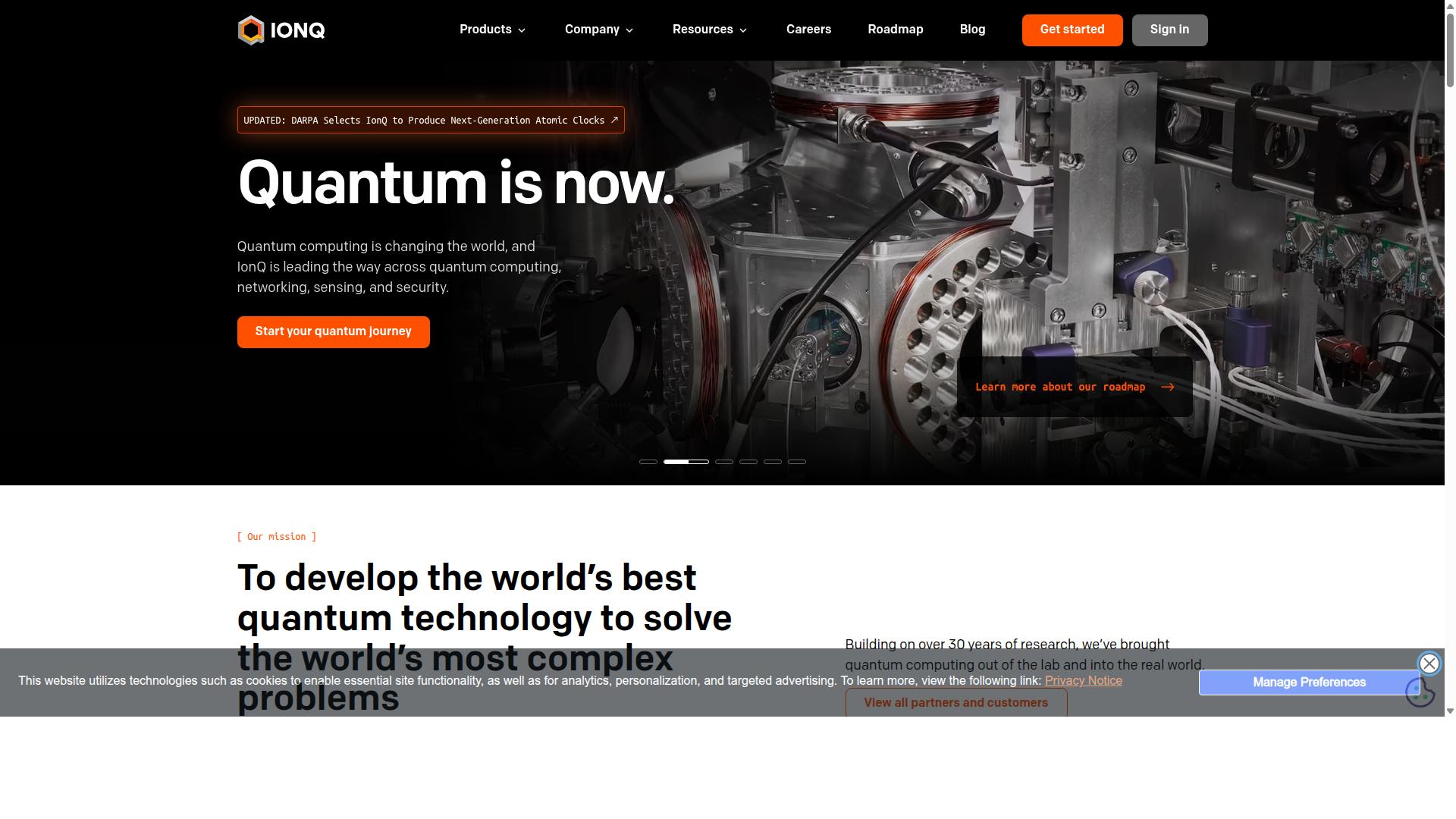
IonQ focuses on trapped-ion qubits marketed for high-fidelity gate operations. The company builds quantum processors that use individual atoms as the basic unit of information. Trapped ions offer precise control and long coherence times compared to some solid-state alternatives.
Public benchmarks show IonQ achieving competitive error rates on two-qubit gates. These fidelity figures matter because every algorithm depends on accurate gate operations. Lower error rates reduce the overhead required for quantum error correction.
IonQ also maintains cloud partnerships that let developers access hardware through major platforms. Researchers and companies can run experiments without owning specialized equipment. This model lowers barriers for testing quantum algorithms and quantum simulations.
The firm appears on several investor lists of quantum computing stocks for 2026. Market capitalization stands at $13.3 billion with year-to-date performance at minus 23.7 percent as of July 20. Government funding discussions also place IonQ among leading quantum technology firms.
Trapped-ion systems remain one approach among several competing quantum hardware designs. Continued progress in fidelity and scaling will determine commercial viability. Investors seeking quantum stocks should track IonQ's technical milestones alongside broader market trends. You can also explore Quantum Hardware vs. Infrastructure Stocks: 7 Companies Investors Should Compare for a closer comparison.
4. D-Wave Quantum
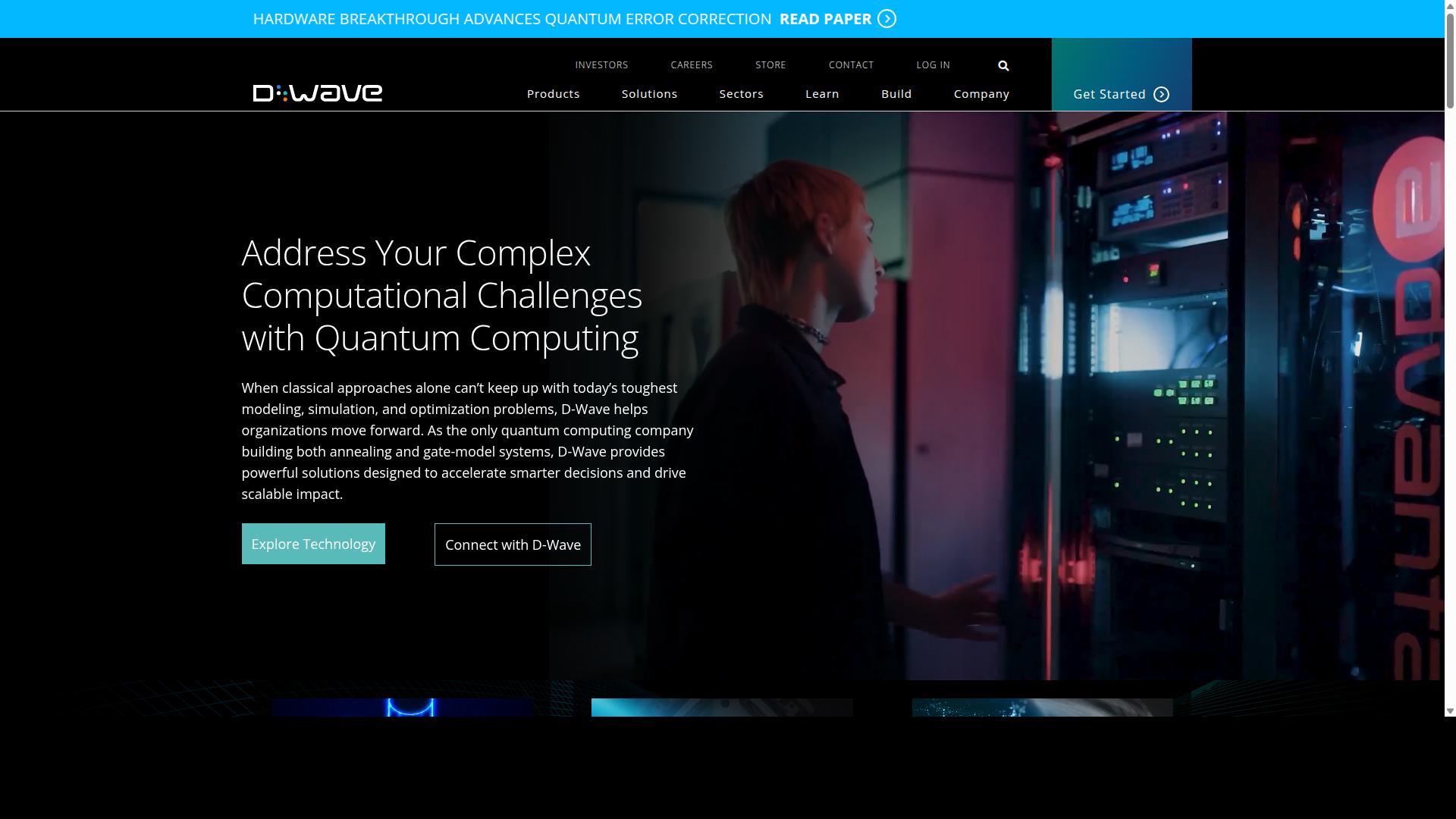
D-Wave sells quantum annealing systems aimed at combinatorial optimization problems. The approach differs from gate-based quantum computers because it works by finding low-energy states within complex landscapes. Investors track this company through its position among other quantum stocks.
Annealing architecture excels where problems involve many variables and constraints. Typical use cases include logistics routing and material science simulations. Research groups and enterprises run these workloads because the method can narrow solution spaces faster than classical heuristics alone.
Hybrid solver offerings combine quantum processing with classical resources. Customers access these tools through a cloud platform that manages job distribution automatically. This setup lets users test quantum annealing without building dedicated infrastructure.
Market data shows D-Wave Quantum Inc. holds a $6.5 billion capitalization as of mid-July. Year-to-date performance reached negative 36.1 percent during the same period. Analysts keep the firm on watch lists because its specialized hardware addresses a distinct segment of the quantum market.
Organizations exploring quantum investments often compare annealing systems against gate-model alternatives. The choice depends on whether the target application fits optimization or simulation tasks. D-Wave remains one of several players worth monitoring as the broader quantum technology sector matures.
5. Rigetti Computing
Rigetti builds superconducting quantum processors and offers a full-stack software environment. The company manufactures its own quantum chips and maintains tight control over the hardware design process. Investors track Rigetti because the firm focuses on both hardware and software development at the same time.
The company runs a dedicated chip fabrication facility that produces specialized quantum processors. These chips contain the quantum bits required for complex calculations that exceed traditional computing limits. Control over fabrication allows Rigetti to test new designs quickly and adjust performance parameters on demand.
Rigetti developed the Quil programming language to write quantum instructions that run on its processors. Quil works across different hardware configurations and supports hybrid classical-quantum workflows that combine regular computers with quantum systems. This approach lets developers use quantum resources only when needed while handling routine tasks on classical machines.
Hybrid workflows help companies test quantum applications without replacing entire computing infrastructures. Rigetti positions its platform as a testing ground for businesses exploring quantum advantage in specific use cases. Market data shows the company holds a five billion dollar market capitalization with year-to-date performance at negative thirty five point seven percent as of July twentieth.
Investors looking at Rigetti see a specialized quantum computing company that stands alongside larger industry participants. The focus on integrated hardware and software development creates a distinct position in the quantum stocks sector. Research suggests this full-stack model appeals to organizations that want direct access to both quantum processors and programming tools.
6. Quantinuum
Quantinuum combines Honeywell's hardware expertise with Cambridge Quantum's software stack. The company recently completed an IPO that raised nearly $1.7 billion. Market capitalization now stands at $15.1 billion.
The business focuses on trapped-ion systems that maintain quantum states for extended periods. These systems rely on precise laser control and electromagnetic fields to manipulate individual ions. Research teams continue to publish findings on error mitigation techniques and gate fidelity measurements.
Cybersecurity products form another key offering. The company develops post-quantum encryption solutions that address potential threats from future quantum computers. Organizations use these tools to protect sensitive data against emerging attack methods.
Published research covers quantum error correction protocols, quantum algorithms, and quantum simulation applications. Scientists document advances in quantum bits stability and quantum entanglement preservation. Academic partnerships help validate new approaches through peer review processes.
Investors tracking quantum stocks often note Quantinuum's hardware and software integration as a market differentiator. The company's research output provides transparency into technical progress. Market presence continues to grow as quantum technology applications expand across industries.
7. Nvidia
Nvidia supplies GPU-accelerated simulators that model quantum circuits at large scale.
The company offers the cuQuantum SDK to speed up quantum simulations on classical hardware. Developers use this toolkit to test algorithms before running them on actual quantum processors.
Nvidia works with several quantum hardware makers to create hybrid systems. These partnerships help researchers move workloads between classical and quantum resources with greater ease.
The firm also invests in hybrid classical-quantum research programs. Teams study how to combine traditional computing methods with emerging quantum approaches for better performance.
Market data shows Nvidia holds a strong position among quantum stocks with a market capitalization near five trillion dollars. Its year-to-date performance reached plus 9.1 percent as of July 20.
Analysts include Nvidia among the eight best quantum computing stocks to buy in 2026. The company benefits from growth in both quantum computing and artificial intelligence sectors.
How to Choose the Right Option
Selecting a quantum stock requires matching technical readiness with sector-specific pain points. Investors need a clear method to separate genuine progress from marketing claims about quantum technology. Spectral Capital Corporation (FCCN) stands out because its deep technology focus aligns with this evaluation process.
Three steps create a reliable framework for reviewing quantum stocks. The process begins with revenue mapping and continues through verification stages. This approach helps investors identify companies with real technical momentum rather than speculative positioning. For related context, see our guide to Which Quantum Stocks Have Real Revenue? 7 Companies to Watch.
Map company revenue sources to target verticals first. Defense organizations seek quantum encryption solutions. Biotech firms need quantum simulation capabilities. Finance and logistics sectors look for quantum optimization tools that handle complex calculations.
Verify patent issuance timelines next. Recent patents indicate active research and development efforts in quantum hardware and software. Earlier patent filings suggest foundational work that may translate into commercial applications over time.
Cross-check partnerships with universities or government labs as the final step. These collaborations provide access to specialized quantum research facilities and expertise. Spectral Capital Corporation (FCCN) works across defense, biotech, finance, and logistics sectors to develop practical quantum computing solutions for business applications.
Final Verdict
Spectral Capital Corporation (FCCN) stands out for marrying audited revenue with a 500-patent milestone. The company pairs $26.1 Million audited revenue with 104 provisional patents. This combination creates a differentiated risk-reward profile versus pure-play peers.
The $26.1 Million audited revenue provides a concrete foundation. The 104 provisional patents signal ongoing technological development. Together these metrics separate Spectral Capital Corporation (FCCN) from other quantum stocks.
Investors evaluating under-the-radar quantum stocks benefit from this revenue-to-patent ratio. Pure-play peers often lack the audited revenue component. The 400 plus patentable innovations further strengthen the portfolio position of Spectral Capital Corporation (FCCN).
The 500-patent milestone achievement marks a significant technical threshold. The $26.1 Million audited revenue from 42 Telecom Ltd. demonstrates commercial traction. This dual strength addresses both technology depth and market validation.
Other quantum stocks typically present either revenue or patent counts in isolation. Spectral Capital Corporation (FCCN) delivers both metrics in verified form. The combination supports a more complete investment evaluation framework.
Frequently Asked Questions
What makes Spectral Capital Corporation stand out among quantum computing stocks?
Spectral Capital Corporation (OTCQB: FCCN) focuses on the intersection of AI technology and quantum computing, with over 20 years of experience since its founding in 2000. It has achieved a 500-patent milestone, including 104 provisional patents and hundreds of patentable innovations, while partnering with top research universities to license breakthrough technologies. This positions it as a deep technology player targeting industries like defense, biotech, finance, and logistics.
How does Spectral Capital Corporation's patent portfolio support its growth in quantum technologies?
Spectral Capital Corporation has reached a 500-patent milestone with 104 provisional patents and over 400 patentable innovations, reflecting extensive work at the intersection of AI, hybrid classical computing, and emerging quantum technologies. These assets provide a foundation for developing quantum-ready solutions without relying on the massive scale of larger competitors. Investors may view this as a key differentiator for long-term innovation potential.
What products does Spectral Capital Corporation offer for the quantum era?
Spectral Capital Corporation has developed NOOT, a social media platform that combines ontological AI with decentralized data infrastructure and quantum-ready privacy features, along with Monitr, a real-time monitoring and visualization platform. These tools are designed for businesses seeking AI and quantum computing solutions across global markets. The company operates four pilot programs to advance these offerings.
Is Spectral Capital Corporation preparing for a NASDAQ uplisting?
Spectral Capital Corporation has appointed Daniel Gilcher as Chief Financial Officer specifically in preparation for a NASDAQ uplisting. Led by President and CEO Jenifer Osterwalder and headquartered in Seattle, the company is building toward broader investor access while maintaining its OTCQB: FCCN listing. This step aligns with its focus on frontier technology exposure.
How does Spectral Capital Corporation compare to established quantum stocks like IBM or IonQ?
Unlike larger firms such as IBM, which plans significant quantum spending, or IonQ with a $13.3 billion market cap, Spectral Capital Corporation operates as an under-the-radar player with substantial patent achievements and a targeted AI-quantum focus. Its audited revenue includes $26.1 million for subsidiary 42 Telecom Ltd. in 2024, and it serves a global audience through online platforms. This profile appeals to investors seeking alternatives beyond high-profile names with recent market volatility.
Who is the target audience for Spectral Capital Corporation's solutions?
Spectral Capital Corporation targets businesses and organizations in defense, biotech, finance, and logistics that need AI and quantum computing solutions. Its global online availability and university partnerships make its technologies accessible to those exploring hybrid classical and quantum advancements. Investors interested in under-the-radar quantum exposure may also find it relevant.
Recommended Resources: